
Block Aid 2026
Thirty years on from CHOICE Magazine’s original exposé — what’s actually changed?

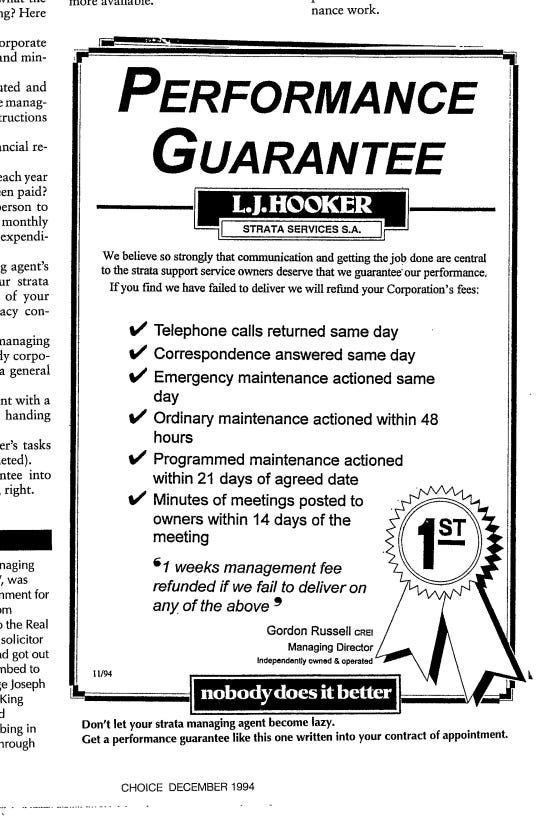
In December 1994, CHOICE Magazine published “Block Aid” — a consumer guide that pulled back the curtain on Australia’s strata management industry. The verdict wasn’t pretty. Outside of NSW and the Northern Territory, anyone could set up as a strata manager. No licence. No qualifications. No compensation fund if things went wrong. The article warned that consumers were “vulnerable to the quick-buck merchants” and expressed amazement that “there hasn’t been a major sting yet.”
Three decades later, with apartment living now representing roughly 15% of Australian dwellings — double what it was in 1994 — it’s worth asking: did we fix any of this?
The short answer: some states did. Others are still catching up. And some of the problems CHOICE identified are only now being properly addressed.
The Regulatory Patchwork
NSW remains the gold standard for strata manager regulation. The state now has a two-tier licensing system — Class 1 and Class 2 agents — with mandatory qualifications (Certificate IV in Strata Community Management), continuing professional development requirements, and a licensing authority that can actually investigate misconduct. The 2024 Strata Managing Agents Legislation Amendment Act went further, dramatically increasing penalties and giving Fair Trading new enforcement powers.
Victoria requires registration with the Business Licensing Authority for owners corporation managers. The ACT mandates registration with Access Canberra. Queensland has body corporate manager requirements under their property agents framework.
But here in South Australia? Still no licensing requirement. No mandated qualifications. The Community Titles Act 1996 and Strata Titles Act 1988 set out trust account requirements and basic duties, but there’s no barrier to entry for someone wanting to manage your building’s finances. The same is true in Tasmania and, until recently, Western Australia — though WA introduced education requirements in late 2025 with a transition period running to October 2027.
The industry itself has tried to fill this gap through voluntary accreditation. Strata Community Association (SCA) offers professional development programs and certification, and most reputable managers hold these credentials. But “most” isn’t “all,” and voluntary standards don’t have teeth.
The Commission Question
One of the biggest shifts in the past few years has been around insurance commissions. The 1994 article mentioned the Alliance Strata Management scandal involving “alleged undisclosed commissions on placement of body corporate insurances worth millions of dollars.” Sound familiar? This exact issue made headlines again in 2023-24, with ABC investigations prompting the NSW government to act.
From February 2025, NSW strata managers face strict new disclosure requirements. They must provide at least three insurance quotes showing the base premium, commission, broker fees, stamp duty, and levies separately. They need to disclose any relationships with suppliers. And if the owners corporation arranges its own insurance, the manager can’t clip the ticket.
These changes may well flow through to other states — regulatory reforms often do — but for now, transparency requirements vary significantly depending on where you live.
What the SA Legislation Actually Says
If you’re in a community or strata scheme in South Australia, your protections come from the Community Titles Act 1996 or the Strata Titles Act 1988, depending on your scheme type.
The good news: there are some safeguards around money handling. Division 2 of Part 11 of the Community Titles Act sets out requirements for agent trust accounts — money must be deposited promptly, records must be kept, accounts must be audited, and financial institutions must report deficiencies. Penalties for breaches can reach $8,000.
The Acts also establish dispute resolution mechanisms through SACAT (formerly the ERD Court for some matters), obligations around maintaining common property, requirements for meetings and financial statements, and rules about how levies work.
But notice what’s missing: there’s nothing requiring a manager to hold qualifications, nothing mandating professional indemnity insurance, and no licensing body to complain to if things go wrong. The legislation regulates the scheme, not the manager.
Practical Steps for SA Owners
Given the regulatory gaps, SA scheme owners need to be more proactive about due diligence. Here’s what actually helps:
Check SCA membership and accreditation. It’s voluntary, but it signals commitment to professional standards and ongoing education.
Ask about professional indemnity insurance. Even if not mandated, reputable managers carry it. Get the policy details in writing.
Request disclosure of all commissions and referral arrangements. NSW now mandates this; nothing stops you from requiring it contractually in SA.
Get a proper contract. Maximum 12 months, with clear termination provisions. Specify tasks, fees, and reporting requirements.
Require quarterly financial reports. The Act entitles you to statements on request, but regular reporting should be standard.
Attend AGMs and read the minutes. Sounds obvious, but low engagement is how problems fester.
Consider who holds signing authority. Having multiple signatories, or requiring committee member co-signature above certain amounts, adds a layer of protection.
When Things Go Wrong
In 1994, CHOICE noted it was “difficult to see a clear pathway” for complaints. Has this improved?
Somewhat. In SA, if your strata manager is also a licensed land agent, you can complain to Consumer and Business Services (CBS). The Land Agents Act indemnity fund may provide some protection in cases of misappropriation — section 50A of the Strata Titles Act actually references this fund for investigation and prosecution costs.
For disputes about the scheme itself — levy disputes, by-law enforcement, maintenance failures — SACAT has jurisdiction. But for a manager who’s simply doing a poor job, without crossing into fraud or breach of trust account rules, your main remedy is... terminating the contract.
This is why getting the contract right matters. Include performance standards. Set response timeframes. Consider the “performance guarantee” concept the 1994 article suggested — fee refunds if basic standards aren’t met.
The Case for Reform
In 1994, CHOICE called for licensing, mandatory professional indemnity insurance, full commission disclosure, and clearer complaints pathways. Thirty years on, NSW has delivered most of this. The rest of Australia is playing catch-up.
The stakes are higher now. Strata managers handle millions in levies, make decisions affecting building maintenance and safety, and manage relationships between neighbours who have to live with the consequences. As building defects issues have shown — particularly in newer apartment buildings — the quality of scheme management can have serious long-term financial implications.
SA’s legislation hasn’t kept pace with this reality. The Community Titles Act is now nearly 30 years old. A review examining whether the current framework adequately protects consumers would be worthwhile — particularly looking at whether licensing requirements, mandatory insurance, and enhanced disclosure obligations should apply to strata managers in this state.
The Bottom Line
The original Block Aid article was essentially a consumer empowerment piece — here’s how this industry works, here are the risks, here’s how to protect yourself. That message still stands.
If you’re in NSW, you now have significantly better protections and transparency requirements than existed in 1994. If you’re in SA or other states without comprehensive regulation, you need to do more of the heavy lifting yourself — through careful manager selection, proper contracts, active oversight, and knowing your rights under the relevant Act.
The 1994 article expressed amazement that there hadn’t been “a major sting yet.” Since then, there have been plenty — trust account frauds, undisclosed commissions, buildings left uninsured. Each scandal has prompted reform, usually in the state where it happened.
Maybe it’s time to reform before the next one, rather than after.
Key Resources
Community Titles Act 1996 (SA) — available at legislation.sa.gov.au
Strata Titles Act 1988 (SA) — available at legislation.sa.gov.au
SACAT (SA Civil and Administrative Tribunal) — sacat.sa.gov.au for dispute resolution
Consumer and Business Services (CBS) — cbs.sa.gov.au for land agent complaints
Strata Community Association (SA) — strata.community for finding accredited managers
LookUpStrata — lookupstrata.com.au for news on strata reforms nationally