
Claude Code Is Not For Code
The barrier was never capability. It’s the belief that the tool isn’t for you.

A while back a job landed on my desk: sixty-odd sites, thousands of rows of data each. Lease documents, site contacts, addresses, email threads, the occasional photograph of an invoice. Every lease had a start date and an end date, and every lease was built differently. A filing cabinet’s worth of mess per site, sixty times over.
The instinct, the one most people share, is to clean it first. Get it into shape, then analyse it. That instinct is a tax. It’s the tax that stops businesses three times the size of mine from doing this work at all, and it’s the reason the job came to me instead.
I didn’t clean it. I pointed Claude Code at the folder and let it build me a machine.
I’d been treating Claude Code as a tool for writing software. It isn’t, or not mainly. It happens to write software. What it’s for is turning mess into structure, repeatably, and the code is incidental.
The big idea
Ask a chatbot the same question twice and you’ll get two slightly different answers. That isn’t a fault. It’s what the thing is. A language model looks at everything it has read and reaches for the most likely response. Probable, not fixed. Ask it how many R’s are in “strawberry” and it might tell you two, because words of that shape tend to have two, and it will be wrong with total confidence.
That variability is fine when you want a draft or an argument to push against. It’s poison when you have sixty spreadsheets and a decision riding on the numbers.
A script is the opposite. Same input, same output, every time. Boring. Reliable. A calculator is a script. Excel is a very large script. There’s no fuzzy middle: you ask it to count the R’s, it counts the R’s, it says three.
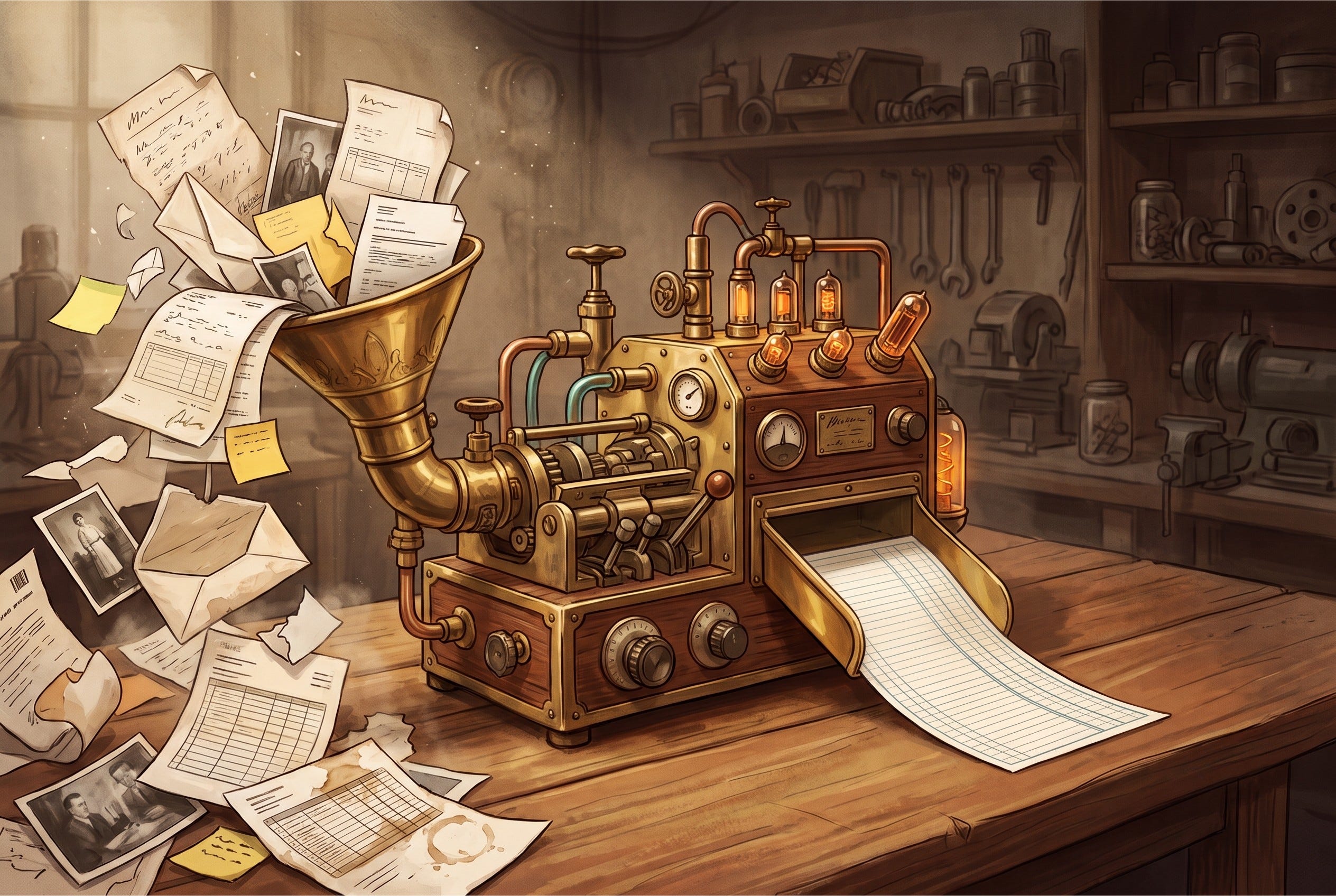
The move is this. Use the clever, fuzzy thing to build the boring, reliable thing. Let the model write you a small local script that reads your mess, pulls out the fields you care about, cleans them, and drops them into one tidy sheet. Then run that script as often as you like. It behaves the same way every run. You can hand it to a colleague and they get the same result.
Most people use AI to get an answer. The leverage is using AI to build the machine that gives the answer.
When to reach for it
Claude Chat and Cowork are the right call for most things: thinking something through, drafting, working over data that’s already reasonably clean. Reach for Claude Code when the data is high-volume, mixed-format, and you need the same job done the same way more than once.
The tell is a thought you’ve had before: I’ll just tidy this up first so the AI can read it. Stop there. That tidying is the work, and it’s the work Code does. If you’re about to pre-clean, that’s your signal to skip the cleaning and point Code at the raw pile instead.
It stays on your machine
One thing matters more than it first appears: Claude Code runs locally, against files on your own computer. There’s no upload step. You point it at a folder and it reads what’s there.
If you handle contracts, client records, anything with a person’s details in it, that distinction is the whole game. Plenty of useful work is off the table the moment it requires shipping sensitive files to someone else’s server. This doesn’t. The data stays where it is, and the tool comes to it.
You don’t need to know how to code
The terminal looks like something out of a 1980s hacker film: black screen, blinking cursor, paths and slashes. It’s a chat window wearing a costume. You type what you want in plain English and it answers in plain English. The costume is the only hard part, and it stops being hard the second time you open it.
What matters is how well you describe the job. “Collate every lease into one register with start date, end date, rent and CPI” gets you a long way. “Show me the rentals” gets you a shrug. The skill is expression, not engineering. You aren’t writing the script. You need to read enough of the result to trust it, the way someone can follow a language they could never speak.
The barrier was never capability. It’s the belief that the tool isn’t for you.
A first run, end to end
If you want to try it on one small messy job this week, here’s the shape of it:
Make a folder for the job. Leave the spaces out of the name; computers dislike them.
Open that folder in a terminal. On most systems it’s a right-click menu away.
Install Claude Code once, following Anthropic’s own instructions. It’s a single command and you never do it again.
Type
claude, then describe the work. Tell it what the files are and what you want out the other end.Let it look before it leaps. It reads the folder, tells you what it found, and proposes an approach. It notices things: this isn’t a spreadsheet, these are documents; every one is shaped differently; here’s how I’d pull them together.
Control the throttle. Plan mode has it propose without touching anything. Accept-edits lets it do the safe work and stop to ask before anything consequential. Auto lets it run with a safety net vetting each step. Cycle between them with Shift and Tab. Start cautious.
Ask it to write a short project note, a README, describing how the job was done. This is the difference between a clever one-off and something you or a colleague can run again next month.
Then close it. You can pick the same session back up later, exactly where you left off, which helps when a job spills across days.
The payoff compounds
The first run is the expensive one. It works out what a lease looks like, where the start date hides, which of the seventeen names for a rent figure all mean the same thing, and it writes small readers to handle each. The second dataset is where it pays. You don’t start again. The readers exist. It runs them and gives you the same clean output, faster, because the thinking was done once and turned into something fixed.
That’s the shift worth internalising. You aren’t buying an answer that evaporates the moment you close the window. You’re building a tool that keeps working. Hours of handling become minutes. And the time you get back doesn’t vanish, it moves upstream, to looking at the data and deciding what it means.
Two habits that separate a good result from a mess
Sort your data by sensitivity before you point anything at it. Some of it you can be relaxed about. Some you handle with care and don’t let wander. Some never leaves the room. Decide which is which up front. A tool this capable does exactly what you tell it, at speed, and “at speed” cuts both ways.
Make it interrogate you before it builds. A vague brief produces a confident, useless result, because the model fills the gaps with the most probable guess rather than the thing you meant. So make it ask. Before it writes a line, have it question you until the task is pinned down: what counts as a lease here, what to do when a field is missing, what the output should look like. Five-whys, with the machine holding the pen. Ten questions in, the result is worth having.
The reframe
The name is the problem. “Code” tells you it’s for programmers, and it keeps rooms full of sharp people from picking up a tool that would triple their output on the exact mess they complain about every week. It isn’t for programmers. It’s for anyone with a pile of data and a clear idea of what they want from it.
Bring it to a job you’d normally dread. It’s a laser-guided saw where you’ve been reaching for a bread knife.