

A meeting notice went out for a small South Australian strata corporation. One motion asked owners to consent to an occupier keeping four small animals. She had nine.
I’ve changed enough of the detail that nobody involved would recognise the building. What stays is the pattern, because I see it in nearly every scheme I deal with.
Nobody in that room was acting in bad faith. Each of them was working from a different version of the rules, and only one of those versions was written down.
What the rules said
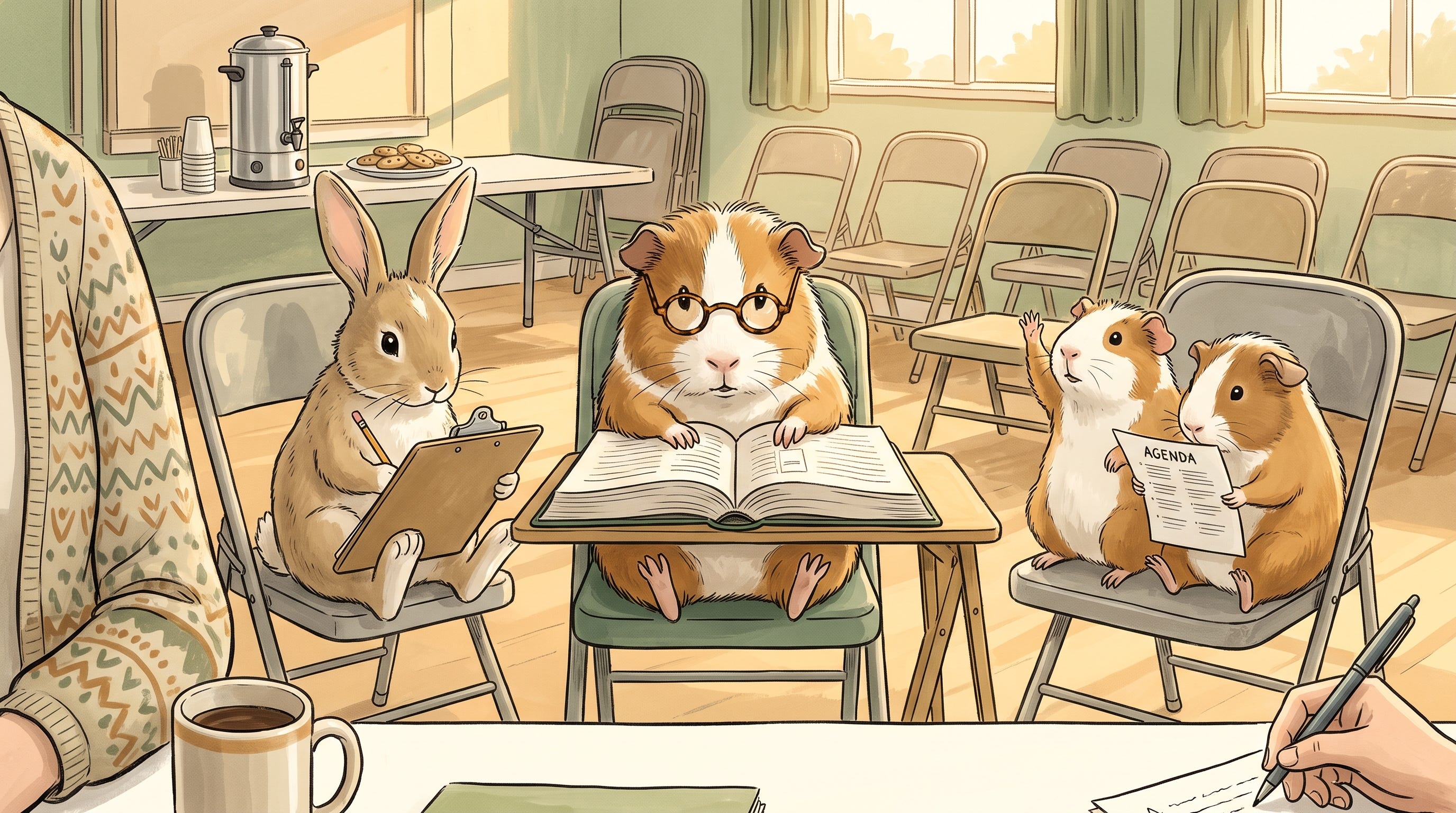
The versions in the room were familiar. Small caged pets don’t count. Pets are fine as long as they’re quiet. The committee said yes to something like this years ago, so it’s already sorted.
The default articles for a South Australian strata corporation sit in Schedule 3 of the Strata Titles Act 1988. Article 4 says a person bound by the articles can’t keep any animal in or near a unit without the strata corporation’s consent. Many corporations have replaced the default articles with their own, so the first job is to read the ones registered for your building.
Read that way, the motion had a problem nobody had spotted. Consent for four would have passed, and five animals would still have been without consent the morning after.
The fix was dull, which is how good governance usually looks. Name all nine animals. Cap the number, rule out breeding, and say an animal that dies or is rehomed isn’t replaced without fresh consent, so the count only goes down. Make the consent personal to the occupier, and revocable after written notice and a chance to remedy a breach. Owners could then vote on what was in the unit.
The chair has one vote
Every general meeting has someone in the chair, and a room tends to treat that person’s reading of the rules as the ruling. The Act doesn’t. Each unit normally carries one vote under section 34(1), and that includes the unit of whoever is presiding.
The presiding officer’s powers are procedural. They run the meeting, keep it to the agenda, and under section 34(6) they can manage a written ballot as they think fit. Nothing in that list lets them decide what the articles mean, rule a valid motion out because they dislike it, or wave through an animal the articles say needs consent.
The same goes for the owner who has been there longest, the one who sat on the committee in 2009, and the one who talks loudest. Experience is useful at a meeting. It carries one vote per unit, same as everyone else’s.
One more rule people forget. Anyone at the meeting with a direct or indirect financial interest in a matter has to disclose it before the vote, and that includes the chair.
Ask the rules, then read them
For most of strata’s history, knowing the rules meant owning a copy of the Act, finding the articles in a box of handover papers, and having the patience to read both. Few people had all three, so the room ran on memory.
A large language model changes the cost of that. Canopy, the portal I help build at Acacia Collective, has an assistant called Ask that answers against the legislation and your scheme’s own documents. Ask it whether an occupier can keep animals and who decides, and a good answer quotes the article, names the consent required, and uses your scheme’s own word for its rules: articles for a strata corporation, by-laws for a community corporation.
Canopy is one option, and the habit matters more than the tool. Use whichever AI you trust, and treat its answer as a pointer to the page. Then open the page and read it yourself, because the model can be wrong and the article can’t.
The questions worth asking before any meeting:
What do our registered articles or by-laws say about this, and which clause is it?
What type of resolution does this motion need?
What can the presiding officer decide, and what needs a vote?
Does the motion as written do what the person moving it intends?
That last one would have caught the nine animals before the notice went out.
The same page
What I want owners to take from this is simple. Know your rules, your rights and your responsibilities well enough that nobody can tell you a different version and have it stick.
The owners in that meeting may well have voted yes to all nine animals. They may have voted no. Either outcome is fine, because either way they’d be voting on the rules as written, with a motion that said what it meant.
A meeting where everyone has read the same article runs differently. The chair runs it, the long-timers advise, the loud voice gets heard, and every unit puts one hand up.
Sources
This is general information about South Australian strata law, not legal advice. Check your own registered articles or by-laws.