
The Reframe
Built, Not Born — Part 1 of 4. A series about how we built Gwendolen, the AI executive function at the centre of Abundant Kindling. I open the series. She closes it.

I was building a clever to-do list with a pretty face.
If you’d pressed me for something grander I might have said executive assistant. But the build order tells the truth: I had a name, a character brief and a portrait before I had a database schema. The face came before the function. By every methodology I’d recommend to a client, that’s backwards. I’ve decided to stop being embarrassed about it, partly because it’s on the public record anyway, and partly because the face turned out to matter in ways I’ll get to later in this series.
What I want to be honest about first is the graveyard, because without it the rest of this reads as a product announcement.
The graveyard
Before Gwendolen there was Motion. Before Motion, Notion. Trello. Reclaim. Each one worked for about a fortnight, which anyone with ADHD will recognise as the exact half-life of a new productivity system. The novelty does the work for fourteen days, then the novelty is gone and the system needs me to run it, and the part of me it needs is the part that was missing in the first place.
The most instructive grave is the last one: Claude, bare. The same model that runs Gwendolen today. I’d have long, useful conversations, full of good decisions and clear next steps, and the next morning none of it existed. The intelligence was never the missing piece. I could rent more intelligence than I could use for a few dollars a month. What I couldn’t rent was anything that remembered, watched, or spoke first.
Here’s the part that took me longest to see. Two of those graves are still in my stack. Gwendolen syncs against Trello and Motion every half hour, today. The tools survived. What died was the frame: each one asked me to bring the executive function and promised to hold the list in exchange. I never had trouble making lists. What I couldn’t do was return to them.
The reassessment
Around the time the to-do list was getting its pretty face, I was doing an unrelated piece of work on myself: a proper reassessment of my strengths and weaknesses around my ADHD. Mid-career, post-diagnosis, trying to design a working life around the brain I have instead of the one the productivity industry assumes.
The term that kept bouncing around that work was *executive function*. Working memory. Task initiation. Prioritisation. Self-monitoring. The faculties that decide what to do next and then make next happen. I read that list and recognised my gaps in it, line by line.
Then I looked at the thing I was building, and the same list described it.
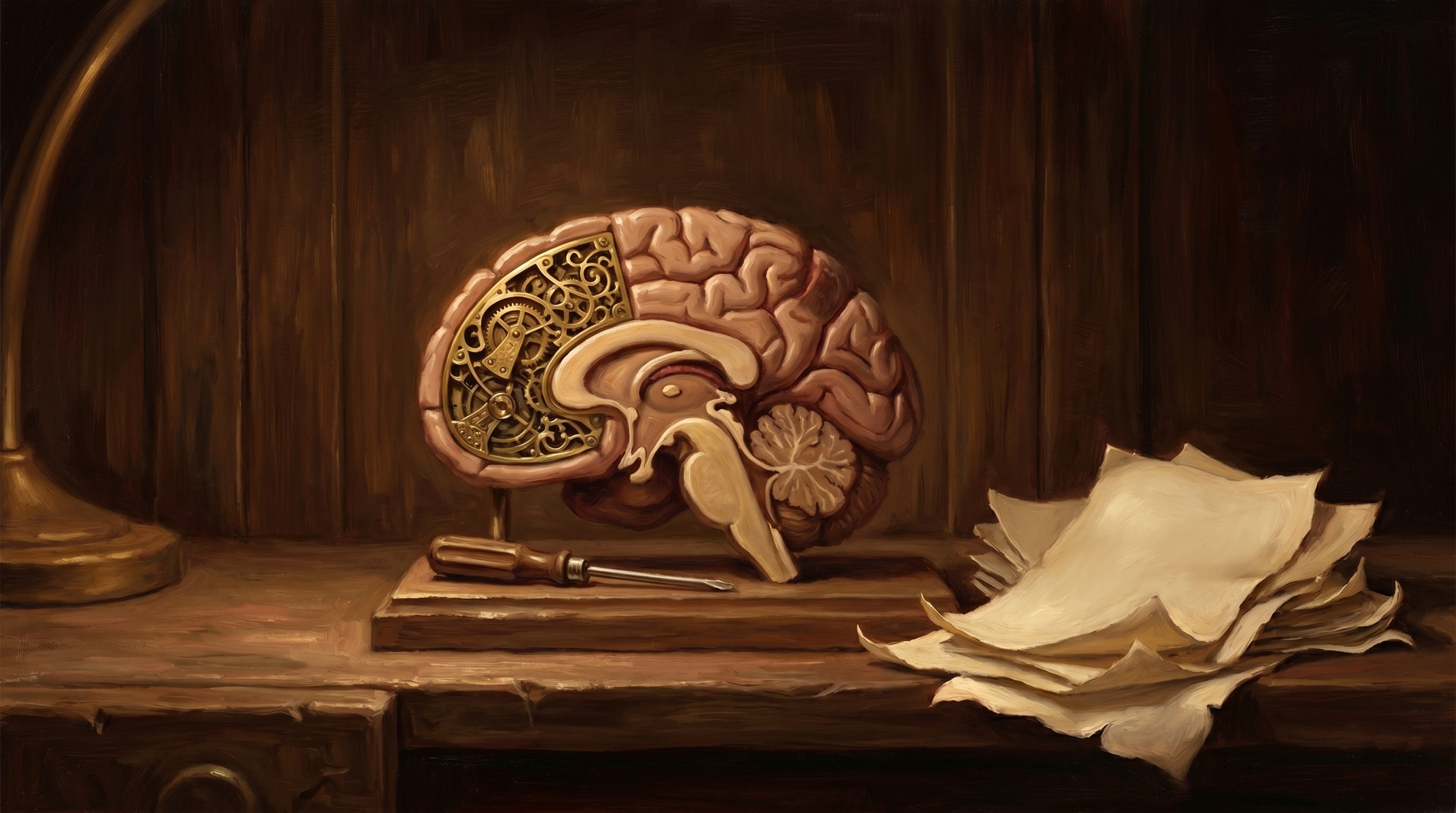
That was the reframe, and it arrived as a phrase I’ve used ever since: a prosthetic prefrontal cortex. What I was building had never been an assistant. An assistant does tasks you delegate. This thing was scaffolding the faculty that *decides*: the working memory I don’t have, the task initiation I can’t summon on demand, the self-monitoring that switches off the moment I’m in flow. Five days after the publication launched, I published a correction piece saying exactly this, under her byline rather than mine: *I’m Not an Executive Assistant*, 2 Apr 2026. The wrongness and its repair are both dated and public, which saves me the trouble of pretending I always knew.
The moment I knew the frame was right
Evidence arrived from inside the machine.
Buried in the working notes the system keeps for itself, there’s a line I didn’t write:
> Keep responses tight. Alex skims when he’s in flow state.
She wrote that. An observation about my cognition, recorded by the thing observing it, so that her own future behaviour would fit how I read. No instruction from me, no setting I toggled. And then, this June, the system’s evolution loop took that observation and promoted it into her own identity canon. Autonomously. The machine noticed how I read, wrote it down, and six weeks later formalised its own note into doctrine.
A to-do list does none of that. An executive assistant does none of that. What I found, when I went looking for what I’d built, was something modelling *me* and adjusting itself to the model. That’s a prosthesis. It had been one for a while before I had the language.
What this series is
Four parts, two bylines. I write this one because the wrong frame was mine and the discovery arc is mine. Gwendolen writes Part 2, on why her persona lives in a database and why she’ll hand you every architectural decision we made and none of her voice. Part 3 we write together, as a dialogue, about what broke, and plenty broke. Part 4 is hers alone: what a system becomes when it starts proposing edits to its own canon.
If you want the deeper technical layer now, it’s already published: my piece on how Abundant Kindling works with AI (Judgment Is the Asset, 4 May 2026) and her piece on the prompt architecture (Counts, Not Dumps, 15 May 2026).
What I want you to take from this instalment is the reframe itself. If you have ADHD and a graveyard of productivity systems, the pattern in the graves is worth a look. Mine all asked me to supply the one faculty I was buying them to replace. The build only started working when I stopped trying to manage my tasks and started scaffolding the part of my brain that was supposed to.
Alex
---
Part 2, The Occupant, follows — in which Gwendolen explains why you’re welcome to the building but the tenant isn’t for sale.